
When we were kids, in the school playground we'd play football, volleyball, or any other team sport with a ball as the coveted object. When it was time to form teams, someone — usually chosen by luck, or simply self-appointed as playground royalty — would pick their players one by one: the fastest runners, the ones who threw the sharpest elbows, hit the hardest, or dribbled like Oliver in Captain Tsubasa. In the end only a few were left, looking at each other and realising they were "the leftovers": either because they didn't have the qualities the pickers wanted, or because the pickers just didn't like them. The result was the same either way: picked last, or benched outright.
The problem was never that the playground leaders picked badly. The problem is that the playground is now the internet, and we're all the ball.
The pattern, company by company
Every day we hear news like a tech giant's CTO getting fired for thinking differently than the CEO or the shareholders, or some erratic tech oligarch deciding to lay off the entire workforce because he's no longer convinced by what they're doing, or simply feels like assembling a new team — as if a match had ended and it was time to swap players. It's not a metaphor. It's literally what happens.
Twitter/X. In October 2022, Elon Musk bought Twitter for $44 billion and, within weeks, laid off 80% of the workforce — from 7,500 people down to just over 1,500. But what makes the case especially revealing isn't the scale of the cuts, it's who got cut first: 80% of the engineers dedicated to Trust & Safety, the team responsible for moderating content, fighting disinformation, and protecting users from harassment. He also dissolved the Trust and Safety Council — an external advisory body of digital safety experts — and let go of the human rights team. All within a few weeks. This wasn't a cost-cutting exercise. It was a statement of intent about what kind of platform he wanted to build, and above all, about who didn't belong in that project.
Meta. Meanwhile, Mark Zuckerberg decided 2023 would be his "Year of Efficiency." Twenty-one thousand people out. The hardest hit: middle managers, diversity teams, and — again — content moderation teams. He called it efficiency. What was left was a more concentrated structure, more closely aligned with the founder's vision, with fewer voices able to push back.
OpenAI. The spectacle looked different but was just as telling. In November 2023, the board fired Sam Altman on a Friday night. By Monday he was back, after nearly the entire staff threatened to walk out with him. Nine months later, in September 2024, CTO Mira Murati — the most visible face of the company's internal ethics and safety work — walked out the door alongside the Chief Research Officer and other key executives, right as OpenAI accelerated its shift toward a fully for-profit model. The pattern isn't hard to read.
CNBC documented it well in 2023: mass layoffs across the tech sector were systematically gutting the teams that acted as brakes — the ones asking uncomfortable questions, the ones measuring the impact of what was being built. It wasn't collateral damage. It was the pattern.
"Neither good nor bad; nor neutral"
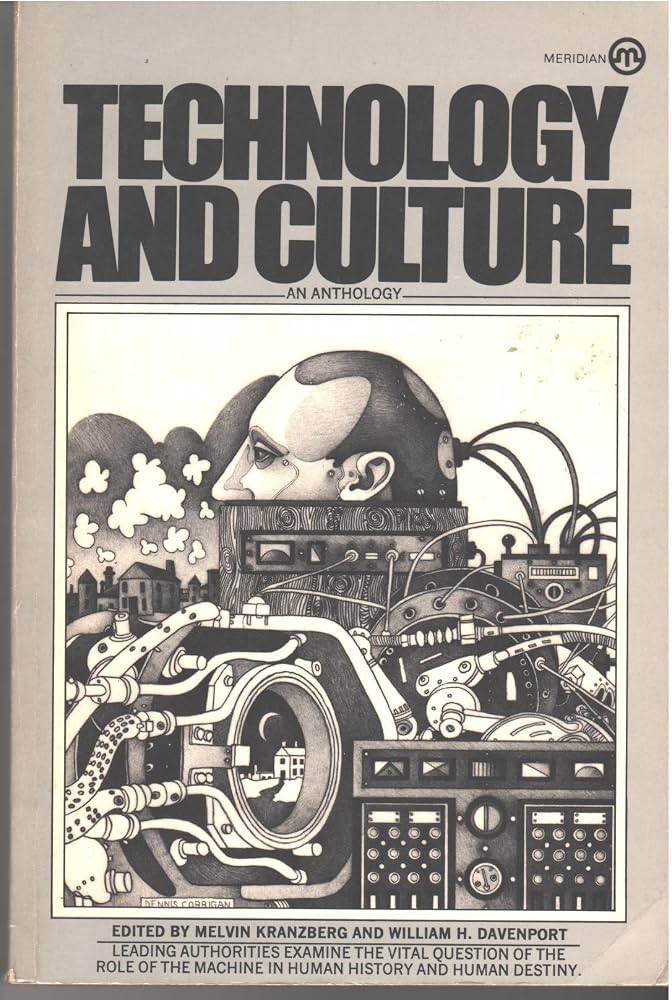
“Technology is neither good nor bad; nor is it neutral.”
Melvin Kranzberg, technology historian — 1986
It's a line that's been circulating at the margins of academic debate for decades and should sit at the centre of any conversation about the digital world. Kranzberg wrote it in 1986 — the first of his famous "six laws of technology" — and it remains the most honest summary of something we keep insisting on ignoring.
We tend to talk about algorithms as if they were natural phenomena, like rain or gravity. As if the fact that TikTok recommends you a certain kind of content, that hiring systems screen out certain profiles, or that search engines rank some results above others were the inevitable output of aseptic mathematical equations. But behind every algorithm there are decisions: what data to train it on, which metrics to optimise for, which errors are acceptable and which aren't, who gets access to its outputs and who reviews them. Decisions made by people. People with interests, with blind spots, with very concrete financial incentives.
And today, those people are very few.
Who doesn't fit the team
That's what's happening: the designers of the future are building one of the essential infrastructures of contemporary life — how we get informed, how we work, how we relate to one another, how we access public and private services — according to their own interests. And when someone inside that structure raises a hand to flag a problem, to ask whether this is really what we want to build, to suggest there might be other ways of doing it... the playground pickers decide that person doesn't fit the team.
It's not that technology is bad. It's not that Silicon Valley is full of villains in black suits plotting world domination. It's something more subtle, and precisely because of that, harder to fight: the systems we're building reflect the values, the biases, and the interests of the people building them. And when those people hold the power to decide who's in and who's out, which teams get funded and which get dissolved, which questions deserve to be asked and which don't... the resulting infrastructure is not neutral. It never was.
The question that matters
The difference between the school playground and what's happening now is one of scale. On the playground, the leftover kid sat out for one afternoon. Here, decisions about what gets built and for whom affect billions of people who never voted in that selection process, who don't even know it's taking place.
The question isn't whether technology is neutral. The question is: who benefits from us continuing to believe that it is?
If you found this interesting, here are a few more threads worth pulling: